Introduction ://
Blockchain technology has transformed the way digital transactions are recorded and verified. While most users are familiar with concepts such as blocks, miners, and cryptocurrencies, fewer understand the crucial role played by the Mempool. The Mempool serves as a temporary holding area for transactions before they are permanently added to the blockchain. Without it, blockchain networks would struggle to organize, validate, and process the large volume of transactions submitted by users.
This article explores what a Mempool is, how it works, why it matters, and its impact on transaction fees and network performance.
What Is a Mempool?
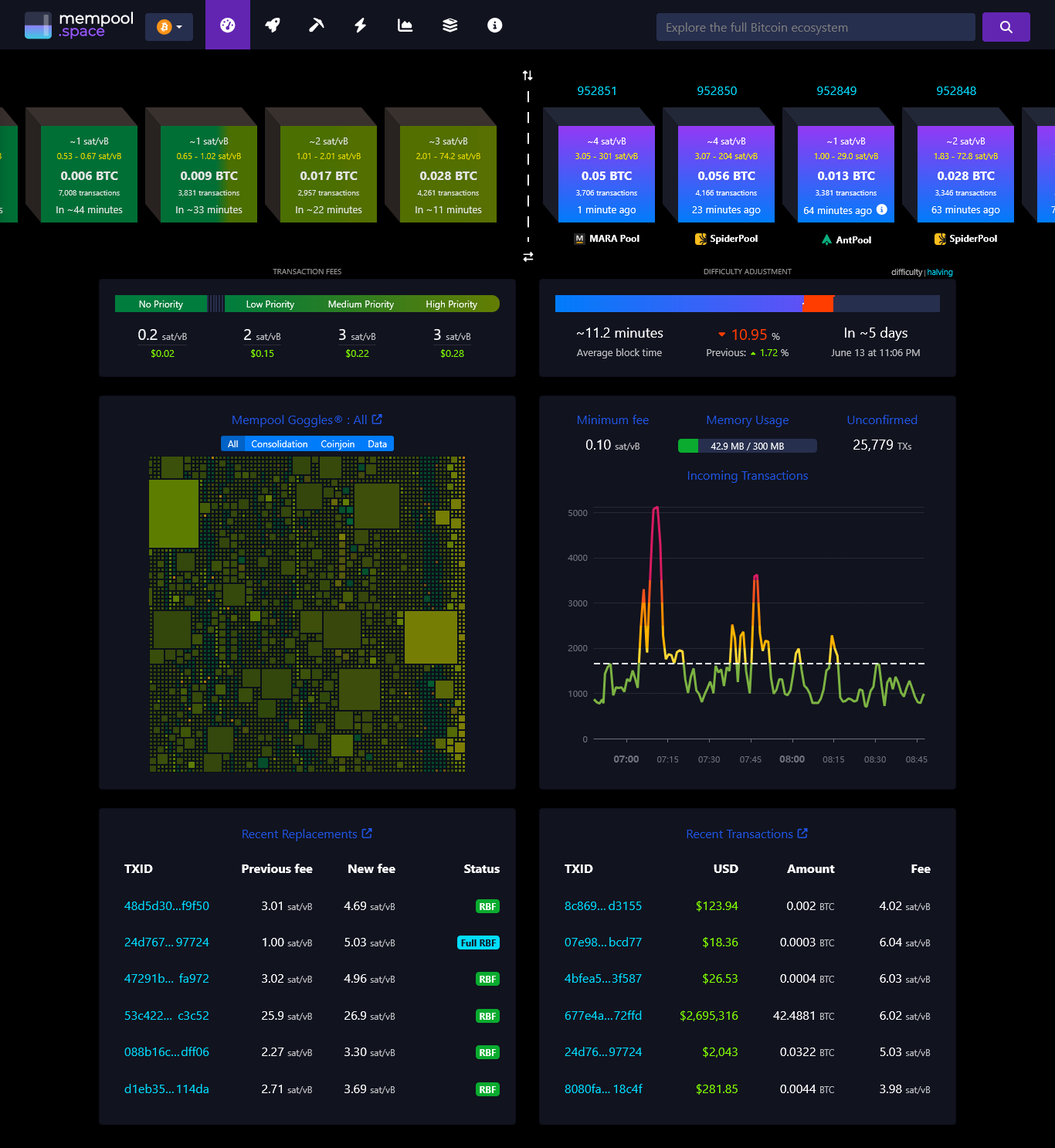
The term Mempool is short for memory pool. It refers to a temporary storage space maintained by blockchain nodes where valid but unconfirmed transactions are held before they are included in a block.
When a user initiates a transaction—such as sending Bitcoin from one wallet to another—the transaction is first broadcast to the network. Before miners or validators can include it in a block, the transaction resides in the Mempool.
Think of the Mempool as a waiting room at a busy train station. Passengers (transactions) arrive and wait until a train (block) becomes available to take them to their destination (confirmation on the blockchain).
How the Mempool Works
The process typically follows these steps:
1. Transaction Creation ://
A user creates and signs a transaction using their private key. The transaction contains details such as:
:>Sender's address :>Recipient's address :>Amount being transferred :>Transaction fee
2. Broadcasting ://
The transaction is broadcast to the blockchain network and received by nodes.
3. Verification ://
Each node verifies that:
1. The transaction follows protocol rules. 2. The sender has sufficient funds.
3. The digital signature is valid. 4. The transaction is not a double-spend attempt.
4. Entry into the Mempool ://
Once verified, the transaction is stored in the node's Mempool. Different nodes may have slightly different Mempool contents depending on network conditions and timing.
5. Block Inclusion ://
Miners or validators select transactions from the Mempool and include them in a new block. Transactions offering higher fees are often prioritized because they provide greater rewards.
6. Confirmation ://
When the block is added to the blockchain, the transaction is confirmed and removed from the Mempool.
Why Is the Mempool Important?
The Mempool plays several essential roles:
Transaction Organization //
It acts as a staging area where transactions await processing, helping nodes manage network traffic efficiently.
Fee Market Creation //
Most blockchain networks have limited block space. The Mempool creates a competitive environment where users can offer higher fees to receive faster confirmations.
Network Stability //
By buffering incoming transactions, the Mempool prevents the blockchain from becoming overwhelmed during periods of heavy activity.
Spam Protection //
Transactions with extremely low fees may remain in the Mempool for extended periods or eventually be dropped, discouraging network spam.
Mempool and Transaction Fees
One of the most noticeable effects of Mempool congestion is its influence on transaction fees.
When demand is low:
. The mempool contains relatively few transactions.
. Fees remain low.
. Confirmations occur quickly.
When demand is high:
. The Mempool becomes crowded.
. Users compete for limited block space.
. Fees increase significantly.
For example, during periods of intense market activity, Bitcoin transaction fees can rise dramatically as thousands of users attempt to have their transactions confirmed quickly.
Mempool Congestion
Mempool congestion occurs when new transactions arrive faster than the network can process them.
Common causes include:
. Cryptocurrency market volatility . NFT launches . Token airdrops
. Network attacks or spam campaigns . High user adoption
During congestion:
. Confirmation times increase. . Fees rise.
. Low-fee transactions may remain pending for hours or even days.
Differences Across Blockchain Networks
Not all blockchains use Mempools in exactly the same way.
Bitcoin :>
Bitcoin maintains one of the most well-known Mempool systems. Transactions compete based primarily on fee rates measured in satoshis per byte.
Ethereum :>
Ethereum's Mempool includes transactions competing through gas fees. Users can pay higher gas prices to incentivize validators to prioritize their transactions.
Solana and Other High-Speed Chains :>
Some modern blockchains use alternative transaction-handling mechanisms designed to reduce congestion and improve throughput, though temporary transaction queues still exist in various forms.
Mempool Monitoring :>
Many blockchain analysts and traders monitor Mempool activity because it provides valuable insights into network conditions.
Key metrics include:
. Number of unconfirmed transactions
. Average transaction fee
. Estimated confirmation time
. Total transaction volume waiting for confirmation
A growing Mempool often indicates increased network demand and can signal upcoming fee spikes.
Security Considerations
Because transactions are visible in the Mempool before confirmation, attackers can sometimes observe pending transactions and attempt strategies such as:
. Front-running
. Transaction replacement
. Miner Extractable Value (MEV) exploitation
Blockchain developers continuously design solutions to mitigate these risks while preserving transparency.
Challenges and Future Developments
As blockchain adoption grows, Mempool management remains an active area of research. Key developments include:
1. Layer-2 scaling solutions
2. Improved fee estimation algorithms
3. More efficient transaction propagation
4. Enhanced privacy mechanisms
5. Dynamic block size optimization
These innovations aim to reduce congestion, lower fees, and improve overall user experience.
Conclusion ://
The Mempool is a critical yet often overlooked component of blockchain infrastructure. Acting as a temporary holding area for unconfirmed transactions, it helps organize network activity, facilitates fee markets, and maintains system stability. Understanding how the Mempool operates provides valuable insight into transaction confirmation times, network congestion, and blockchain economics.
As cryptocurrencies and decentralized applications continue to expand, the role of the Mempool will remain central to the efficient functioning of blockchain networks.

AI Website Software